Pages
About Me
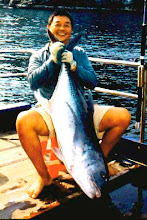
- Ng Chan Chiew
- At present I am retired and spending my time mostly on fishing and photography.
I bought my first SLR way back in 1982. It was a Minolta XG1. My last film camera was the Maxxum 9000.
When the fantastic Sony Alpha 100 was launched, I changed over to the digital system. My Alpha 580 was acquired followed closely by my Alpha 77.
My main interest in photography is lifestyles, sports, sceneries, nature, birds and macro shots. Lately, I have spend more time on bird and nature shooting. As a regular contributer to some fishing magazines, I shoot quite a lot of photographs of anglers too....hence my photography blog is named 'SHOOT THE HOOKER'.
Having grown up near the confluence of two, the Kangsar and the Perak Rivers, it is not surprising that one of my main interest is fishing. My younger days were spent swimming and fishing.... with a bamboo pole, line and small hooks.Now while fishing, my friends and I do take a lot of photographs of anglers in action. The anglers must be careful so as not to accidentally hook on to a photographer. So I think as a reminder, I would like to name my fishing blog as 'HOOK THE SHOOTER'.
Sunday, June 23, 2013
RAPTORS - Black-shouldered Kite (Elanus caeruleus).
Black-shouldered Kite (Elanus caeruleus). Found in India, S. China, S.E.Asia, and New Guinea. A bird of opened country like padi fields, grassland and oil palm plantations. Feeds mainly on rodents.
RAPTORS - Crested Serpent-eagle (Spilornis cheela).
The term Raptor is given to identify 'Birds of prey'. . It is infact derived from the Latin word 'rapere' meaning 'taking by force'. Many of the birds shown here are migrants as well as residents of Malaysia. The migatory birds came here from the Northern Hemisphere during their winter month because of scarcity of food and to breed in our wormer climate.
a) Crested Serpent-eagle (Spilornis cheela). A resident in Malaysia and Singapore. This bird is widely distributed in India, South China, S.E.Asia and the Sundas. Mostly found in mangrove forests, oil palm plantations and other wooded areas. Its main diet is snake, hence the name.
Friday, June 21, 2013
BUTTERFLY LIZARD OF MALAYSIA.
![]() |
| A beautiful healthy Malayan Butterfly Lizard. |
The butterfly lizard is an agamid native of Thailand, Myanmar, Malay Peninsular and Sumatra. There are eight species and they breed by normal sexual reproduction. But four species are parthenogernetic and has only one sex. They reproduced by cloning. The Malayan Butterfly Lizard (Leiolepis beliana beliana) is one of them.
![]() |
| Its paterns and markings are colourful. |
These lizards prefer open, dry, sandy areas where they live in burrows. At the slightest sign of danger they will dart back into their burrows, but will re-emerge about five minutes later.
Vegetations and small insects, constitute to their main diet. They are monogamous and will care for their youngs for some months before the youngs leave to build their own burrow.
![]() |
| A Butterfly Lizard feeding on a cricket. |
They are quite territorial and can be seen to drive away intruders from nearby burrows. I have seen some of them living quite close together. In a radius of 15 meters, I have counted three burrows.
![]() |
| Peeping out of its burrow before coming out to forage. |
Thursday, March 21, 2013
Milky Stork (Mycteria cinerea).
The Milky Stork, a large water bird, with an estimated world wide population of around only 5,550. Listed as "Vulnerable" by the IUCN/Birdlife International. it can only be found on the West Coast of Malaysia, Cambodia, Thailand and Vietnam. Historically, in Malaysia they are found mostly along the West Coast, but due to habitat deterioration, low reproduction and predators their number is very low now.
The lake at Pulau Kelumpang has being confirm as a reserved breeding, feeding and roosting sanctuary for the Milky Stork. Around the Kuala Gula area, a semi wild population of released Milky Stork can be found.
![]() |
| A Milky Stork scratching itself. |
The Milky Stork, a large water bird, with an estimated world wide population of around only 5,550. Listed as "Vulnerable" by the IUCN/Birdlife International. it can only be found on the West Coast of Malaysia, Cambodia, Thailand and Vietnam. Historically, in Malaysia they are found mostly along the West Coast, but due to habitat deterioration, low reproduction and predators their number is very low now.
![]() |
| Drying out after its bath. |
The lake at Pulau Kelumpang has being confirm as a reserved breeding, feeding and roosting sanctuary for the Milky Stork. Around the Kuala Gula area, a semi wild population of released Milky Stork can be found.
![]() |
| Collecting twigs for nest building. |
![]() |
| Frolicking in the hot sun. |
Wednesday, March 20, 2013
Asian Openbill Stork (Anastomus oscitans)
![]() |
| An Openbill with outstretched wings while landing. |
The Asian Openbill Stork are distributed throughout the Indian Subcontinent, Thailand right up to Cambodia. During certain times of the year they can be seen among the wetland and padi fields of Malaysia.
![]() |
| An Openbill foraging for food. |
![]() |
| A freshwater crab fell victim. |
![]() |
| The openbills like to sun themsleves like this. |
Tuesday, March 12, 2013
Ancestor Day (Hari Moyang) of the Mah-Meri Orang Asli tribe of Malaysia.
![]() |
| This article was published in the SJ Echo March 2015 issue. |
![]() |
| The Moyang Bojos. A main character of the Jo'oh Dance. |
![]() |
| The ancestor shrine being prepared for blessing ritual. |
![]() |
| Blessing ritual in progress. |
The women dancers wear blouses made from pounded barks of the Terap tree. While their hairs are decorated with objects and things in their daily lives, weaved from the leaves of the pandanus trees.
![]() |
| The Jo'oh Dance. |
![]() |
| They are highly skill weavers too. |
![]() |
| Some sing too. |
![]() |
| Heads of women dancers decorated with weaved objects. |
![]() |
| The percussionist performing. |
Wednesday, January 23, 2013
BUGIS STREET OF SINGAPORE.
![]() |
| Entrance to Bugis Street. |
![]() |
| Durians. King of fruits to the locals but obnoxious to the uninitiated. |
After the war, from 1950-1980s, hawkers gathered here to ply their wares. Bars began to spring up and transvestites gathered and attracted a lot of Western Tourists. At the height of the Vietnam War, the GI R&R really made this place boom. Everywhere, the writeups of this place is all about the sleezy going on. The transwomen of Bugis Street is even immortalised by an English-Language film made by a Hong Kong film company.
![]() |
| It's a shopper's haven. |
![]() |
| Clothings are aplenty too. |
![]() |
| You name it they have it. |
![]() |
| Food of many nationalities can be had. |
![]() |
Every taste is catered to.
|
![]() |
| Very cheap too. |
![]() |
| Locals snacks to appease your stomachs. |
![]() |
| You can rest anywhere after a hard day's shopping. http://en.wikipedia.org/wiki/Bugis_Street#Pre-1950s |
Subscribe to:
Posts (Atom)