Pages

About Me

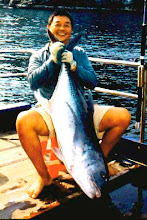
My photo
At present I am retired and spending my time mostly on fishing and photography. I bought my first SLR way back in 1982. It was a Minolta XG1. My last film camera was the Maxxum 9000. When the fantastic Sony Alpha 100 was launched, I changed over to the digital system. My Alpha 580 was acquired followed closely by my Alpha 77.

My main interest in photography is lifestyles, sports, sceneries, nature, birds and macro shots. Lately, I have spend more time on bird and nature shooting. As a regular contributer to some fishing magazines, I shoot quite a lot of photographs of anglers too....hence my photography blog is named 'SHOOT THE HOOKER'.


Having grown up near the confluence of two, the Kangsar and the Perak Rivers, it is not surprising that one of my main interest is fishing. My younger days were spent swimming and fishing.... with a bamboo pole, line and small hooks.Now while fishing, my friends and I do take a lot of photographs of anglers in action. The anglers must be careful so as not to accidentally hook on to a photographer. So I think as a reminder, I would like to name my fishing blog as 'HOOK THE SHOOTER'.

Saturday, August 28, 2010

GREY HERON (Ardea cinerea).

The grey heron is a wading bird of the family Arderdae. A resident of the temperate countries, they will migrate south during the winter months. When in flight they are very graceful and slow and  are quite noisy with the flapping of the wings.
They can be seen wading in shallow water or perched on top of branches, motionless, waiting for their preys. Small mammals, fish, small reptiles, insect and small birds make up their food chain.
Courtship is a ritual where the male archs it neck, stretching it skyward before lowering to the back. It sometimes snaps its bill and emits a distinctive call.
Nests are built in colonies on top of trees close to lakes, seashores or wetlands. Usually four blueish eggs are laid.
Subspecies of grey heron:
Ardea cenerea cenerea (Europe, Africa, W. Asia).
Ardea cenerea jouyi (Eastern Asia).
Ardea cenerea firasa (Madagascar).
Ardea cenerea moricae (Islands of Baca' Argum, Mauritania).


Perched on top of a branch
waiting for fish or other
 creatures to surface.
Taking off is just as beautiful.
They are graceful in flight.
Sometimes they can be quite playful.
This grey heron just caught a tilapia.

Sunday, August 22, 2010

A CLIMB TO WATCH THE RAFFLESIA CANTLYI.

RAFFLESIA.
It is a parasitic flowering plant found in some countries of S.E. Asia. They grow in the jungles of Peninsula Malaysia, the Borneo Island, Sumatra and the Phillipines.
Named after Sir Thomas Stamfford Raffles, it has many species. The largest is the R. arnoldi, while the smallest is the R. baletei. The one found near Gopeng is the R. cantlyi.
It is an endoparasite of the vine in the genus Tetra stigma. This plant has no stems, leaves or true roots. Called the 'corspe flower' it gives off a foul smell that attracts insects and small mammals to help in the pollination.
Recently I went on a climb up some hills near Gopeng, Perak, Malaysia to watch the rafflesia in bloom. With my bagful of cameras, lenses and a metal Gitzo tripod, I nearly did not complete the climb in the driving rain. Even with the help of ropes, the almost verticle climb was rather taxing on me. Luckily some of the young staffs from tour outfit helped me.


Another view of the same flower.
The rafflesia cantlyi.
A photograph of
our group. Kurt is not in as he
 has to press the shutter button for me.
This is one of our Asli
guides. I nearly gave
up when she told me
there are 2 more
 hills to climb.
Kurt, a macro photography
 expert explaining to the kids
 about the leech in his hand.
Rajah brookes having a drink.
This is another dangerous
plant. But the squirrels
 that feed on the fruits
do not suffer any ill effect.

Be careful to stay clear of
these leaves. One touch and you
are in for a horrible burning
and itchy experience.
An ipoh tree from which the
Orang Asli people got their
 poison to tip their blowpipe
 darts. Notice the slash
wounds on the trunk?
A group of rajah brookes at
a salt lick. The locals must be
 educated not to kill the butterflies
 indiscriminately. Notice a few
 were dead on the ground?
Ran over by some motorbikes.

Thursday, August 19, 2010

CHINESE OPERA

Chinese Opera dates back 4000 years ago. During the Han Dynasty (206BC - AD220) dances were blended with story telling to produce an elementary form of musical drama.
This was further developed during the Zhou Dynasty. During the Song Dynasty, usually groups of family members travel together to put on shows. Actors were trained from very young ages. As opera actors were lowly regarded, women were banned from stage. Their roles were taken over by female impersonators.
In 1790, theater companies from all over China arrived in Beijing to perform for the Qing Emperor, Qianlong's birthday. It was here that the history of the various opera forms that we know today began.
Applying makeup for
 the appropriate character.
An actress with
full colorful costume.
A drama in progress.
Musicians at the front and
below the stage provide
the accompanying music.
The actress bending
 backward for a stunt.
These are the percussionists
 providing the tempo
and beat for the dramas.

Final touchup
before the stage.


Tuesday, July 13, 2010

THE BABA AND NYONYA CULTURE OF MALAYSIA.

The Baba and Nyonya Peranakan culture of Malaysia can be traced back to the 15th and 16th century. It was during this time that the famous Chinese admiral, Cheng Ho, visited the Nasuntara with his fleet. With the arrival of Princess Hang Li Poh in Malacca, the Chinese population here increased. These early arrivals intermarried with the locals, adopted and assimilated some of the cultures into their own to form what is now known as the Peranakan culture.Many of these early arrivals plus quite a number of later imigrants to the colonised S.E.Asia became so assimilated that they speak a mixture of local and Chinese dialects. Today, many of these Peranakan can be found in what was once called the Straits Settlement states of Penang, Malacca and Singapore.


(All photographs shown here were posed by members of the Baba and Nyonya Association of Penang, Malaysia.)

Tuesday, June 22, 2010

MALAYSIAN THAIPUSAM FESTIVAL..


Thaipusam, the Hindu Festival, is mostly observed by the Tamil community in Malaysia. At the Batu Caves temple in Kuala Lumpur, the Nattukotai Chettiar Temple of Penang and the Sri Subramaniam Temple in Ipoh the occasion is celebrated on a grand scale.
This festival is to commemorate the occasion where Parvati gave Murugan a vel (spear) so he could vanquish the evil demon Soorapadman.
Carrying the kavadi by devotees is a physical burden through which devotees implore for help from the God, Murugan.
They prepare themselves for the celebration by cleansing themselves through prayers and fasting. Kavadi bearers also observe celibacy and take only satvik (pure and clean) food. Many of them will shave their heads too.
The kavadis can be in many forms. Most will just carry pots of milk, which was the norm, while others will practice mortification of the flesh by piercing their skin, tonques or cheeks.
A believer getting
her head shaved
Even female devotees
shaved their heads.
In a trance.
A devotee with pierced
skin leading the way.
The compulsory bath.
Piercing the skin.
Kavadis can be in all forms.
A young devotee.

A pair of loving parents
soothing their child.

WESAK DAY IN MALAYSIA.

Wesak Day is a day observed by Buddhists all over the world. It is celebrated by all the different sects of Buddhism as the birthday, enlightenment and  the passing away of Gautama Buddha. Buddhists will gather at their respective temples before dawn to offer hymns, flowers and candles in prayers. Devotees are also called to avoid all kinds of killing and to eat vegetarian food. The following photographs showed some of the celebrations and practices at the Enlightened Heart Buddhist Centre (a Malaysian Tibetan Buddhist temple) at Ampang, Ipoh, Perak.
The sunning (to draw power from the sun)
 of the 60m X 12m giant thanka (painting)
 of the Sakyamurni Buddha at the
Buddhist Enlightened Heart Buddhist
 Center near Ampang, Ipoh.

The beginning of reversing
the position of the giant thanka.

At the end of reversing.

Everybody helps to return the
 giant thanka back to the temple.

Bathing the Buddha.

Devotees seeking blessings.

A devotee seeking
blessing for her family.

Devotees carrying an image
of a Tibetan deity during
circumambulation ritual to seek blessings.

Devotees signing on tiles
as donations to the temple building fun.

Friday, June 18, 2010

MALAYSIAN SPIDERS.

St. Andrew's Cross spider (male).
Habitat: Sunny parts of the forest.

Jumping Spider (female).
Habitat: Foliage in garden,
wasteland and jungle.


Lynx Spider.
Habitat: Shrubs in garden
 and secondary forest.


Red and Silver Spider
Habitat: As a kleptoparasite,
they are normally found in
 the webs of other larger spiders
stealling the meals of the host.


Golden Web Spider
(Female. The tiny legs on the
 web belonged to some
unfortunate males eaten
by the huge female.
The tiny males can be seen
 hanging around the web.)


Big Jawed Spider.


Big Jawed Spider.


A nest of babies.


Spiders are classed as Arachnida of the order Araneida. They have their own characteristics of:
a. The abdomen is attached to the aphalotthorax by a narrow waist.
b. Normally the abdomen of spiders has no segments.
c. They posses spinnerets for producing silk.
Spiders can be divided roughly into the:
1. Web Weavers.
2. Hunters.