Pages

About Me

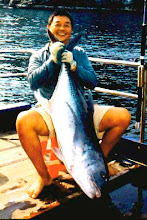
My photo
At present I am retired and spending my time mostly on fishing and photography. I bought my first SLR way back in 1982. It was a Minolta XG1. My last film camera was the Maxxum 9000. When the fantastic Sony Alpha 100 was launched, I changed over to the digital system. My Alpha 580 was acquired followed closely by my Alpha 77.

My main interest in photography is lifestyles, sports, sceneries, nature, birds and macro shots. Lately, I have spend more time on bird and nature shooting. As a regular contributer to some fishing magazines, I shoot quite a lot of photographs of anglers too....hence my photography blog is named 'SHOOT THE HOOKER'.


Having grown up near the confluence of two, the Kangsar and the Perak Rivers, it is not surprising that one of my main interest is fishing. My younger days were spent swimming and fishing.... with a bamboo pole, line and small hooks.Now while fishing, my friends and I do take a lot of photographs of anglers in action. The anglers must be careful so as not to accidentally hook on to a photographer. So I think as a reminder, I would like to name my fishing blog as 'HOOK THE SHOOTER'.

Thursday, March 21, 2013

Milky Stork (Mycteria cinerea).


A Milky Stork scratching itself.


The Milky Stork, a large water bird, with an estimated world wide population of around only 5,550. Listed as "Vulnerable" by the IUCN/Birdlife International. it can only be found on the West Coast of Malaysia, Cambodia, Thailand and Vietnam. Historically, in Malaysia they are found mostly along the West Coast, but due to habitat deterioration, low reproduction and predators their number is very low now.

Drying out after its bath.

     The lake at Pulau Kelumpang has being confirm as a reserved breeding, feeding and roosting sanctuary for the Milky Stork. Around the Kuala Gula area, a semi wild population of released Milky Stork can be found.

Collecting twigs for nest building.

Frolicking in the hot sun.

Wednesday, March 20, 2013

Asian Openbill Stork (Anastomus oscitans)

An Openbill with outstretched wings while landing. 
    

The Asian Openbill Stork are distributed throughout the Indian Subcontinent, Thailand right up to Cambodia. During certain times of the year they can be seen among the wetland and padi fields of Malaysia.

An Openbill foraging for food.
     The storks are normally found congregating at wetlands and padi-fields foraging for food. They feed mainly on molluscs, especially of the pila family. Most of the time the birds used their bill to search for the molluscs in the water and can manage to open the shells to extract the meat. All adults have a gaps in their bills which is well adapted to hold the slippery shells of molluscs. Susprisingly this feature is absent from the juveniles. Water snakes, frogs and large insects round up as part of their food chain too. At times the stork can be seen gliding in flocks, circling in the air, using the thermal to help them move around and save energy.

A freshwater crab fell victim.
     Breeding season is around July to September. Nests with 2-4 eggs are often built on half submerged trees.


The openbills like to sun
themsleves like this.


Tuesday, March 12, 2013

Ancestor Day (Hari Moyang) of the Mah-Meri Orang Asli tribe of Malaysia.

This article was published in the SJ Echo March 2015 issue.
     Mah-Meri (pronounced: Max Mri) one of the Aborigines tribes of Malaysia are confined to the state of Selangor of Malaysia. They are mainly living near the coast and are mostly fishermen. Being skill carvers and weavers, their labour of love are highly valued by art lovers and collectors.

The Moyang Bojos. A main character of the Jo'oh Dance.


The ancestor shrine being
prepared for blessing ritual.
     The Mah Meri are very respectful of their ancestors and as such set aside a day each year as Hari Moyang (Ancestor Day). On this day, the community pays respect to their ancestors and seek their blessings for bountiful harvests.


     Rituals and blessings are offered to all that come to seek. The Jo'oh Dance is performed by women dancers. Masked male dancers called the Moyang Bojos join in the dance too. They dance around a symbolic mountain (weaved out of leaves of the pandanus trees), that represent their belief of how the world come into being. Music is provided by a group of percussionists and singers.
Blessing ritual in progress.
    
     The women dancers wear blouses made from pounded barks of the Terap tree. While their hairs are decorated with objects and things in their daily lives, weaved from the leaves of the pandanus trees.


The Jo'oh Dance.
     On this Ancestor Day, the villagers and (outsiders too) are encouraged to bring food and drinks as contribution to the celebration. These are then displayed on long tables and serve as refreshments after the rituals, ceremonies and dance performances are over.


They are highly skill weavers too.


Some sing too.


Heads of women dancers
decorated with weaved objects.

The percussionist performing.


Wednesday, January 23, 2013

BUGIS STREET OF SINGAPORE.

Entrance to Bugis Street.
Durians. King of fruits
to the locals but obnoxious
 to the uninitiated.
   Bugis, refers to the seafaring people of South Sulawasi province of Indonesia. Before the arrival of the British, the Bugis used to sail up a canal here to trade.

   After the war, from 1950-1980s, hawkers gathered here to ply their wares. Bars began to spring up and transvestites gathered and attracted a lot of Western Tourists. At the height of the Vietnam War, the GI R&R really made this place boom. Everywhere, the writeups of this place is all about the sleezy going on. The transwomen of Bugis Street is even immortalised by an English-Language film made by a  Hong Kong film company.

It's a shopper's haven.
Clothings are aplenty too.
You name it they have it.

Food of many nationalities can be had.
    In the mid 1980s with the building of the MRT underground stations, the whole place was transformed. In order to regain its former glory minus the sleezy reputation the Singapore Tourism Promotion Board transformed this place into a tourist shopping haven.

Every taste is catered to.


Very cheap too.


Locals snacks to appease your stomachs.


You can rest anywhere after
a hard day's shopping.


http://en.wikipedia.org/wiki/Bugis_Street#Pre-1950s


Wednesday, December 26, 2012

CHESTNUT-HEADED BEE-EATER ( Merops leschenaulti )

A chestnut-headed bee-eater with pray in its bill.
A healthy specimen
.
The chestnut-headed bee-eater is a colourful, slender bird, that ranges from India to S.E.Asia. It does not possess the elongated central tail feathers that is common to its cousins. Its breeding range is in sub-tropical broken country sandbanks. Nests are tunnels dug into the sandbanks and the male and female, both take turn to incubate the eggs. Breeding season ranges from February to May.

A pair of chestnut headeds.
Food is mainly insects like bees, hornets and dragonflies. As it depends on insects for food, the type of plants around its habitat is not that important.

Friday, August 17, 2012

LEMANG - THE MALAY DELICACY.

This is how the cut lemangs look like.
 

 Lemang is a must during the fasting months of Ramathan in Malaysia. A traditional delicacy, it is used to break the fast in the evening. Together with the rendang ( a form of paste chicken or beef curry ), they form a really filling meal.


Thick gravy chicken (or beef)
curry is normally eaten
 with the lemang.

   Many roadside stalls will spring up during the days leading up to Hari Raya Aidilfitri or Hari Raya Adha cooking and selling this delicious food.
Made from soaked glutinous rice, coconut milk, salt and sugar over a slow burning fire, this aromatic lemang is really a mouth watering tempatation.


a)  Soaked glutinous rice ready for packing into empty bamboo tubes.


b)  The rice is then poured into the hollow bamboo lined with banana leaves to prevent sticking and to give the lemang its distinctive aromatic taste.


c)  A mixture of coconut milk, salt and sugar is then poured into the bamboo tube.


d)  The rice is now ready to be cook over a fire. The green banana leaves are to prevent the rice from sticking to the bamboo and also to impart it distinctive aroma to the lemang. The lidi (coconut leaf stem) is to allow steam to escape from the bottom of the bamboo so that there is no spillage.


e)  The fire from wood and coconut shells is used to cook the lemang. The bamboos are rotated frequently so as to obtain an evenly cook lemang.


f)  The bamboo is then split open to access the nicely cooked lemang inside.


g)  This is how a roadside lemang stall looks like.


Many thanks to Yeop Lemang.
Encik Zamri Bin Ramli: 017-5226320.
Tuesday, August 14, 2012

Rock Blasting.

Recently I was taken to some rock blasting operation by my friends who is an expert rock blaster. At the quarries that we went to I was shown the different steps, procedures and apparatus used for blasting. I would like to share here the photographs of the whole operation.


1.   Hydraulic crawler drills were used to bore holes of about 50ft-60ft into the rocks. Drill holes were normally 18 meters deep (depending on the bench design) and 89mm in diameter.


2.   The pink coloured cast booster connected to the pink coloured shock tube.


3.  Pink coloured shock tubes with the detonators (for starting the explosion) were then inserted into the cast boosters (dynamites). These were then lowered into the drilled holes in the rock. The end of the shock tube is the detonator.


4.   A mixture of oxidising agents are then pumped into the hole on top of the cast boosters. This bulk emulsion as they are called are used for the secondary explosion. The secondary explosion creates a rapid expension of gas which breaks up the rock.
A rough formula for the amount of bulk emulsion used is 0.4 -0.5 kg per cubic meter of rock. When the cast booster explode, it will create detonation speed that exceed the speed of sound so that the bulk emulsion can be detonated.


5.   The brown coloured bulk emulsion.


6.   Red coloured surface delay detonator connects the pink shock tubes from hole to hole. Delay time is 25 milliseconds.


7.   Black coloured surface detonator together with the yellow shock tube are for row to row detonation.  Delay time is 67 milliseconds.


8.   Blasting site is cleared of people. Alarm is sounded and the blast master made his round to make sure all is cleared before lighting the fuse. Safety fuse burns at 1 second per cm. Normally 4 minutes are needed for the person lighting the fuse to move to a safe distance.


9.   Beginning of the detonations.


10.


11.


12.


13.   Completion of blasting.