Pages

About Me

My photo
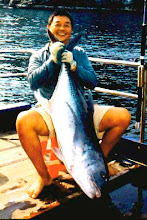
At present I am retired and spending my time mostly on fishing and photography. I bought my first SLR way back in 1982. It was a Minolta XG1. My last film camera was the Maxxum 9000. When the fantastic Sony Alpha 100 was launched, I changed over to the digital system. My Alpha 580 was acquired followed closely by my Alpha 77.

My main interest in photography is lifestyles, sports, sceneries, nature, birds and macro shots. Lately, I have spend more time on bird and nature shooting. As a regular contributer to some fishing magazines, I shoot quite a lot of photographs of anglers too....hence my photography blog is named 'SHOOT THE HOOKER'.


Having grown up near the confluence of two, the Kangsar and the Perak Rivers, it is not surprising that one of my main interest is fishing. My younger days were spent swimming and fishing.... with a bamboo pole, line and small hooks.Now while fishing, my friends and I do take a lot of photographs of anglers in action. The anglers must be careful so as not to accidentally hook on to a photographer. So I think as a reminder, I would like to name my fishing blog as 'HOOK THE SHOOTER'.

Thursday, December 19, 2013

ORIENTAL PIED-HORNBILL


A male Oriental pied-hornbill sitting on a large rain tree near some housing estate.

   The Oriental pied-hornbill (Anthracoceros albirostris) is a rather common hornbill in Malaysia. It can be easily seen around jungle fringes near urban dwellings.


Food consisting of figs, fruits, small reptiles and birds are their main diets. Here a male regurgitated a fig and gently holds it in its bill.


   They like large trees where they build nest in holes in the tree branches. The male will bring mud cakes to the female who will then seal herself inside to lay her eggs and incubate them. Food in the form of figs, fruits, small insects, reptiles and small birds are brought back by the male to feed its mate.


A male hornbill gently feed its mate as she incubates her eggs in her sealed nest.


   I have seen these hornbills built their nests in the bird houses built for owls around the rice fields.

A few fruits that are part of the hornbill diet.


Here a pair of hornbills has colonised an owl shelter for their nests.

Thursday, November 14, 2013

GREY-HEADED SWAMPHEN (Porphyrio poliocephalus).


They like to stretch their wings once in a while.
 
   Grey-headed swamphen: Mainly found around large ponds or marshy areas. It usually is found in one or two feeding on weed covered ponds or the banks. Its nest is a pile of weeds built on floating weeds like the water hyacinth. When alarmed it will hide itself in the weeds.
   It mainly feed on plant and vegetation with small insects, leeches, snails and other small animals.


Friday, October 11, 2013

MAEKLONG RAILWAY MARKET

THE MAEKLONG RAILWAY MARKET (Thailand)


The Maeklong Railway Market is also nicknamed Umbrella Pull down Market. The unique feature about his market is, it is centered around the railway track. Selling fresh seafood and vegetables, the vendors here are very alert to the arrival of the train. Each day a train will pass this place eight times. With the coming of the train, a signal will sound and an announcement will be make about the impending train arrival. Suddenly this canvas covered market will find the awnings being pulled back and the products on sale being pulled to safer place. Immediately after the train pass, the canopies are back on and business will be as usual.
A must see on your tour to Bangkok.


A young vendor selling some fresh clams.


Small eels for sale.


Plenty of cooked salted fish here too.


Scaled and cleaned fish.


A vendor pushing his cart along the track.


A flurry of activities following the announcement of the incoming train.


The canopies are being pulled back. Trays of products are also taken out of the way.


Here it comes. Right on time. A lady vendor was screaming at me in Thai (which I cannot understand). I think she wants me to get out of the way of the train.


The train passed just centimeters away from me. I was pulled back by the same lady that was screaming at me, I think. I am grateful to her for her concern.


Everyone is emerging from their safe spots. The canopies are also being put bck to their normal places.


Monday, June 24, 2013

RAPTORS - Common Barn-owl (Tyto alba).


Common Barn-owl (Tyto alba). It is the most widely distributed owl in the world. Because of its diet of small rodents it is widely used as the biological agent to control the rat population in padi fields and oil palm plantations. It is not uncommon to see small owl houses perched on top of high poles among the padi fields and plantations.


RAPTORS - Brahminy Kite (Haliastur indus).


The Brahminy Kite (Haliastur indus) is a medium size raptor found in India, South China, S.E.Asia and Australia. Usually found living and breeding in mangrove forests along the coasts. It can also be found further inland , like padi fields, ex-mining lands and wetland areas. Their food consist of fish and other small prey. Scavenging is also part of their daily activities.


A Juvenile.

Terns of Malaysia.

Terns are a type of sea or water birds of the family Sternidae. Many are migrants that travel long distances. They have slender bodies and pointed wings. The tails are mostly forked. thus many of them dive into the water to get their food fish. Some will hover above to pick up small food fish when they come to the surface. other will feed on insects too. They are generally long life birds that can live up to and in excess of 25-30 years.

In Malaysia there are 17 species which I will add here as and when I get to photograph them.

A) LITTLE TERN (Sternula albifrons). Small tern with forked tail. Breeding birds have black crown, nape and eye stripe and yellow bill while non breeding have white crown, black legs and bills. Usually in small groups along coastal water, rivers and inland ponds and lakes. Usually hover above water to pick up fish.


B) WHITE WINGED TERN (Childonias leucopterus). Breeding birds have black head, chest, upper and lower
Flock of White-winged Terns.
White-winged Tern.


 part. The bills are yellow with black tips. Can be seen in groups. Sometime hover over water to pick up fish.


Whiskered Tern
C) WHISKERED TERN (Clidonias hybrida). Non breeding birds have greyish and white forehead, black bill and streaks in the eyes. Skim low over water or plunging in to get their food.

Whiskered Tern

A flying tern looking for food.

A hovering tern picking up a morsel.
D) BLACK-NAPED TERN (Sterna sumatrana). Except for black nape, it is mostly white in clour. It has a deeply forked tail and narrow black bill.


Sunday, June 23, 2013

RAPTORS - Barred Eagle-owl (Bubo sumaranus).

c).  Barred Eagle-owl (Bubo sumaranus). Distributed from parts of Thailand, Malay Peninsiular, Borneo, Java and Sumatra. Lives among the lower or upper parts of the lowland forest. A solitary bird that rarely lives higher than 900 meter.
Adult.

Juvenile.